New Civil Discourse class teaches students to argue the right way
May 27, 2026 - Karessa Weir
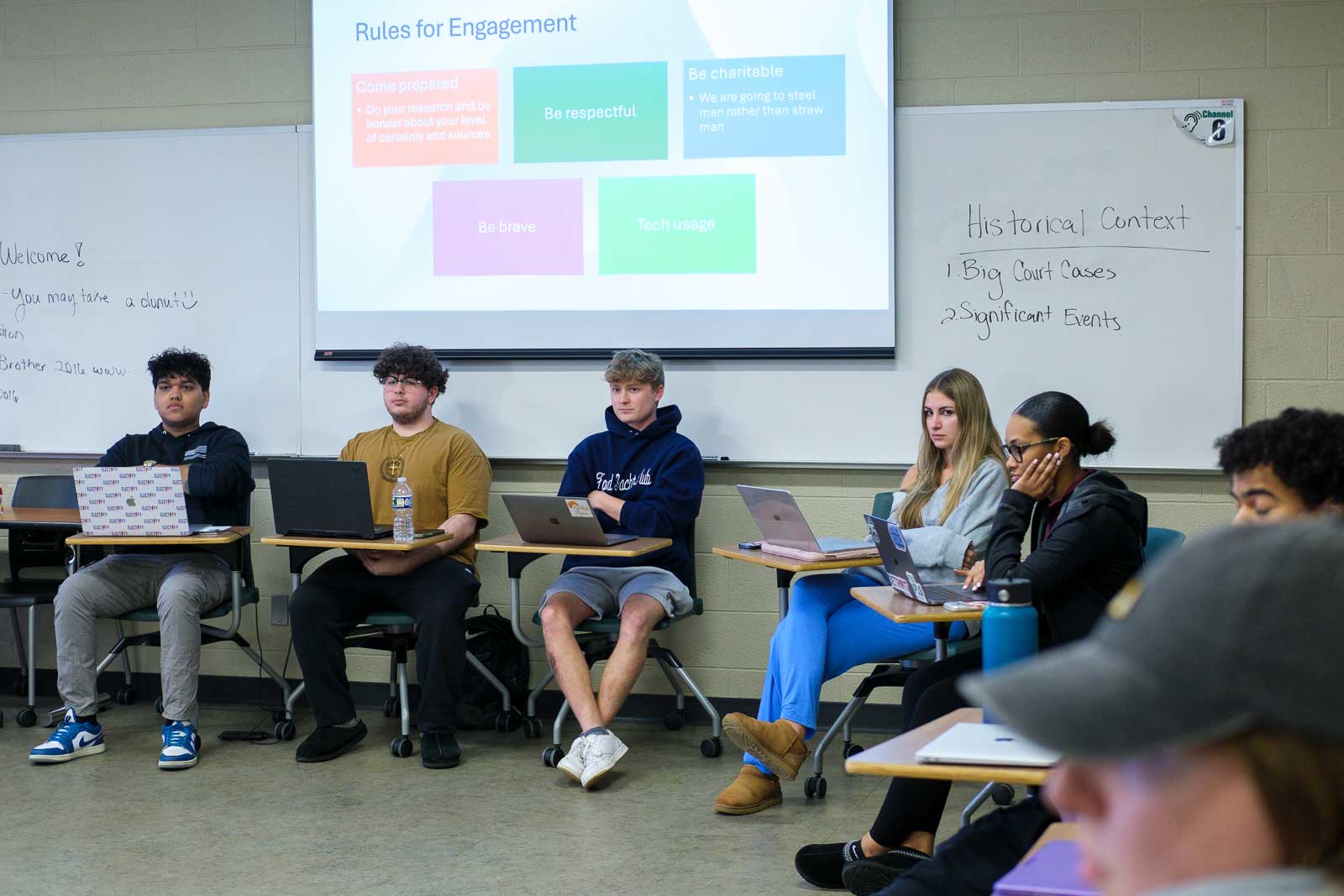
First rule of Civil Discourse: Come prepared (do your research).
Second rule: Be respectful.
Third rule: Be charitable.
Final rule: Be brave.
These rules were up on the whiteboard nearly every session of the newly created PLS Civil Discourse class led by Political Science Instructor Chayse Hurley. The rules were co-created by Chayse and the 25 students in her Spring 2026 course.
“We laid down the rules of engagement. You always had to be prepared. You had to do your research and be honest about your level of preparedness,” Hurley said. “They had to be respectful. We talked about what that meant and basically it came down to listening and not cutting people off.”
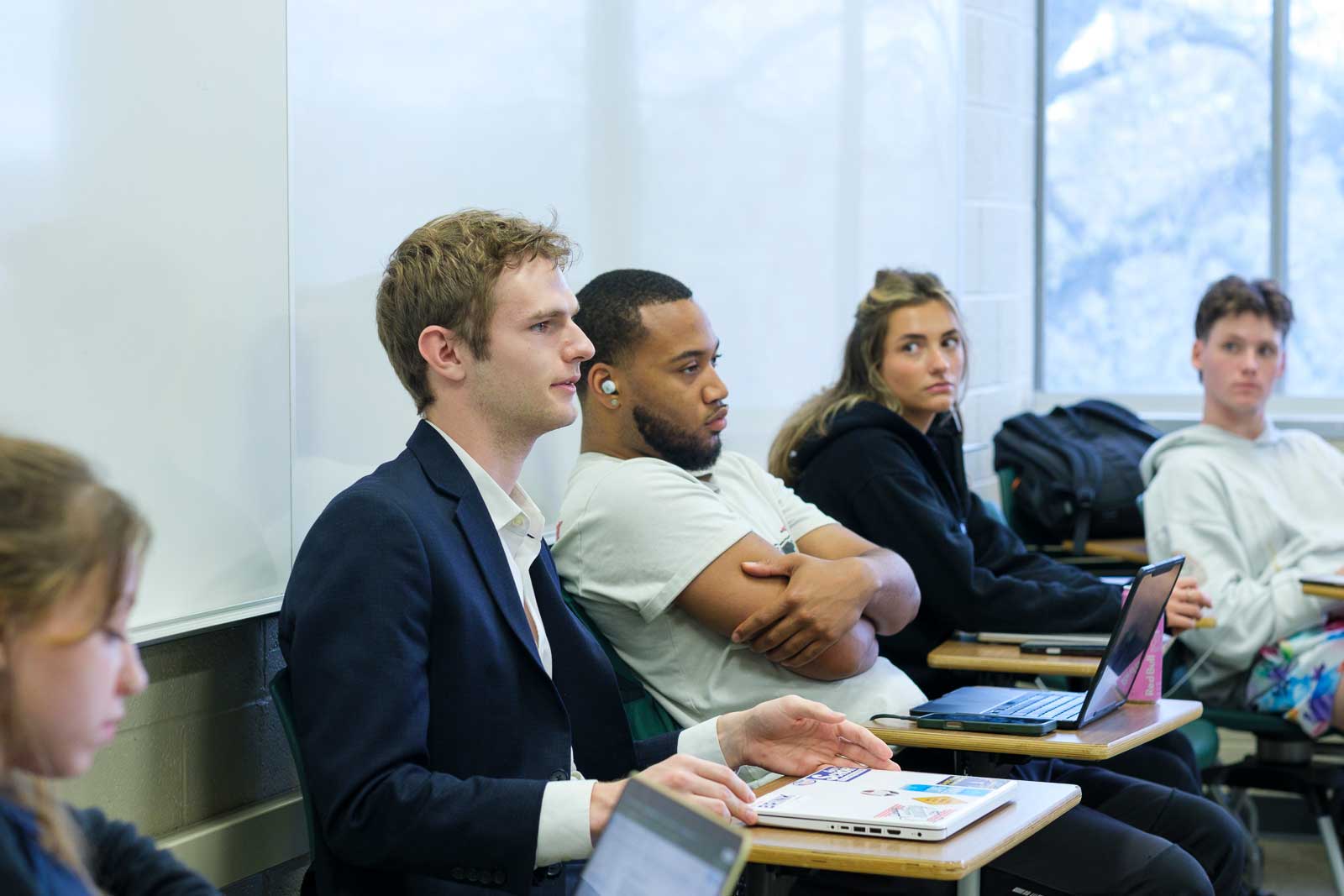
Hurley doesn’t lecture in the bright room in Bessey Hall. Most likely, she is sitting among the ring of desks filled with students who walked into the class with obviously partisan views and not thinking much deeper than the newest clickbait headline.
“They were clear about their political affiliations and would cut each other off and throw out random things they heard,” Hurley said. “The discussions at first were hyperpolarized and very surface level.”
But as they read Aristotle’s “On Rhetoric,” and wrote reflection papers, as they researched their positions, watched politicians debate in person, and learned to fairly consider the other side, something shifted.
And Hurley – as well as the students – noticed a definite change as the semester moved forward.
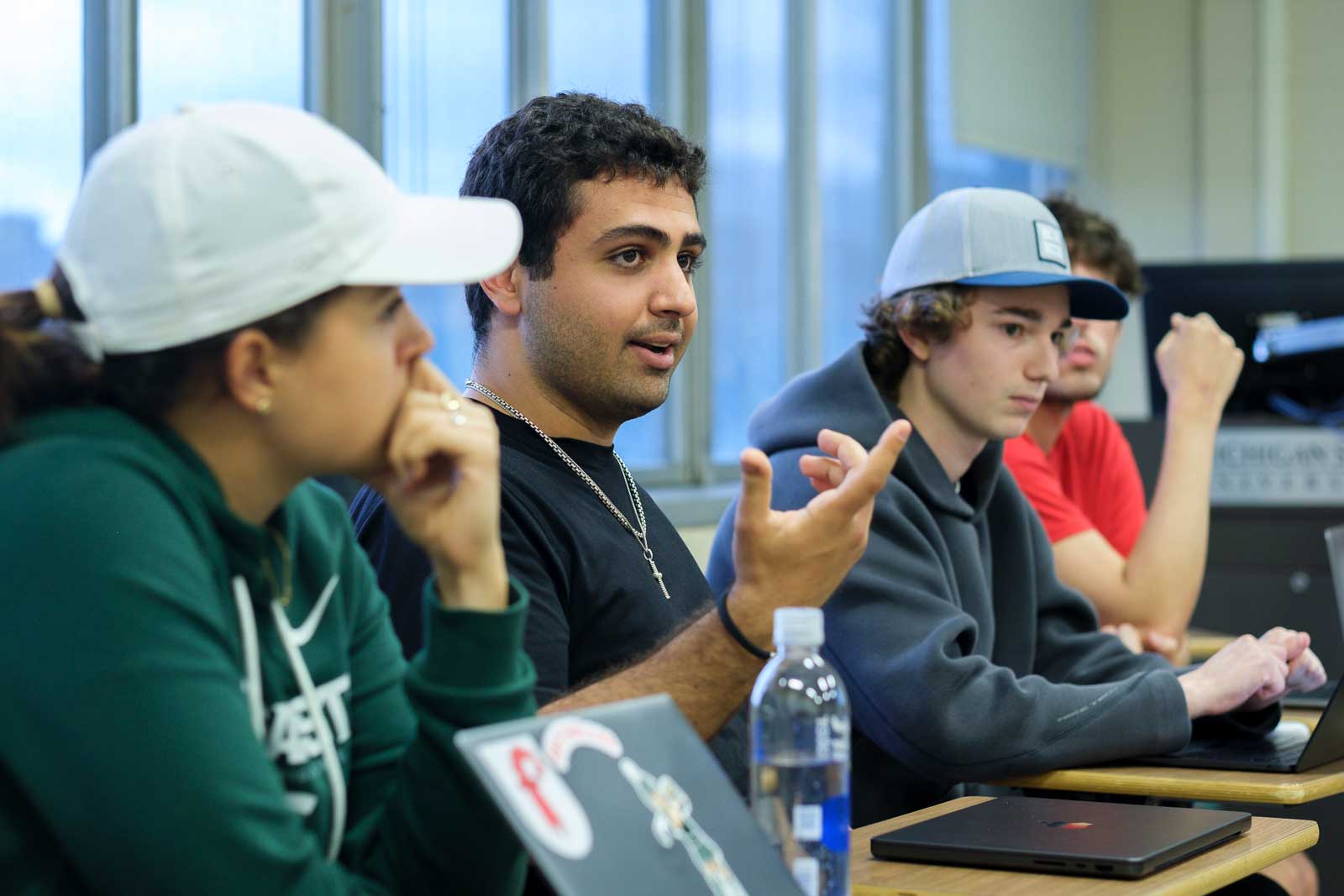 “A lot of the students really highlighted how much change they saw throughout their classmates through the semester,” Hurley said. “What I noticed was the increase in their ability to really charitably look at one another’s perspectives. Not just pick apart an argument but really listening and asking ‘what are the values behind that perspective?’ What are the nuances?”
In an era of extreme partisanship and political violence, Hurley taught them that all sides can find both meaningful places of agreement and meaningful places of disagreement.
“Over the course of the semester they learned to have really civil, nuanced conversations,” Hurley said. “That was what I enjoyed most about the course.”
For Political Science Pre-Law rising senior Aidan Baedke, the class was different from any other class he had taken at MSU and was great preparation for law school.
“I personally loved the class. I thought it was a very fun change of pace from other classes and really enjoyed all of the discussions. I also felt like it better prepared me for law school and post-grad activities compared to more traditional classes. I learned how to "argue" better and learned so much on what makes a discussion good/productive,” Baedke said.
 The course came from Hurley’s discussions with previous students who told her they wanted more meaningful engagement both with faculty and each other. Her K-12 teaching background had shown Hurley that students can learn a lot from each other and made her think, why not teach them how?
“I was hearing that when students had pictured their college experience, they had expected those deep meaningful discussions. They want to engage. They want rich conversation,” Hurley said.
At the same time, alumni and faculty both were saying that there needed to be not just an expectation of civility on campus but actual training for students - a chance to discover what it means to be civil, what tools promote civility, and simply how to be a better listener.
Hurley found that the best way to foster civility in the classroom is to build relationships. She started each class with a “weird ice breaker” or game. From there they would move into their discussion – usually on one topic but sometimes two – that the students had selected and prepared for.
Each discussion had 2-4 facilitators who would choose the topic, assign readings to the class and open the discussions. Each discussion also had one student who was the “active listener” who was taking notes and would write a review of how the discussion went.
The first discussion was like jumping into the deep end of the pool, Hurley said. The students had chosen the Israel-Palestinian conflict right in the height of tensions.
“There was no brawl or anything, but it was not as civil as it could have been. It was kind of good thing because we had a lot of room to grow,” she laughed.
Over the year they tackled environmental policy, immigration, gun rights and control, racial justice, marijuana legalization and many more.
“I was really impressed to see students especially in their final discussions richly discussing not just their own beliefs on things but engaging in nuanced views of other people’s beliefs and being able to understand who the stakeholders are and to propose meaningful solutions,” she said.
Their final discussion focused on what they would do to improve the Civil Discourse class in the future. Hurley was pleasantly surprised at the way they appreciated the different aspects of the class.
“They would say the readings were really hard. They would say ‘man, that was really hard. That was terrible. But also, assign it again!’” she said. “I think they saw the real-world applications to the work we were doing and showed it in their assignments. Their papers were fun to read. They had voice and were thoughtful and fun.”
They also suggested more discussions on topics that weren’t necessarily political such as AI data centers and other issues that aren’t “heavy hitters.”
The course will be offered again in the Spring of 2027 and Hurley believes it would benefit any student at MSU to learn how to conduct civil discourse.
“If you are a student in our modern world, you should want to engage meaningfully in conversation and learn how to do that better,” Hurley said. “Political Science students are more inclined to it because they are passionate about politics but there is a lot of skill building that everyone can benefit from.”